
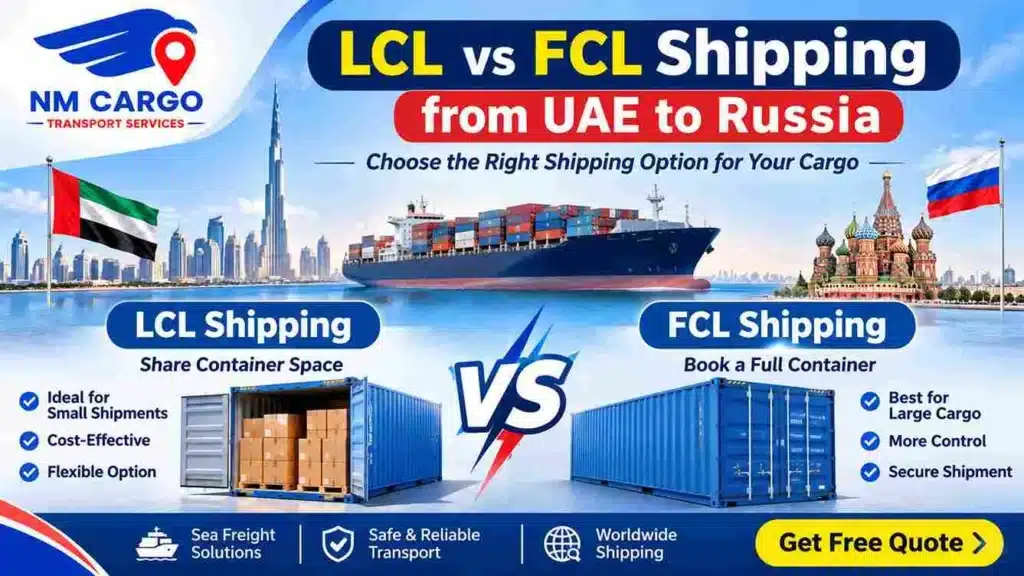
Choosing the right sea freight method is essential when shipping commercial goods, personal belongings, or industrial cargo from the UAE to Russia. LCL vs FCL Shipping from UAE to Russia is an important comparison for businesses and individuals looking for cost-effective and suitable transportation options. LCL (Less than Container Load) allows you to share container space with other shipments, while FCL (Full Container Load) provides a dedicated container for your cargo. Understanding their costs, benefits, transit considerations, and shipping requirements can help you select the right option. With suitable sea freight services from Dubai, you can plan your international cargo transportation according to your shipment size, budget, and delivery needs.
LCL vs FCL Shipping from UAE to Russia: Which Option Is Better?
Choosing the right shipping method is important when transporting commercial goods, personal belongings, machinery, or other cargo from the UAE to Russia. Businesses and individuals generally consider two main sea freight options: Less than Container Load (LCL) and Full Container Load (FCL). Both methods offer different advantages depending on shipment volume, budget, cargo type, and delivery requirements.
LCL vs FCL Shipping from UAE to Russia is an important consideration for importers, exporters, wholesalers, and companies planning international transportation. While LCL allows you to share container space with other shipments, FCL provides an entire container dedicated to your cargo.
At NM Cargo, customers can explore international freight solutions and suitable shipping arrangements based on their cargo requirements. This guide explains the differences between LCL and FCL, their costs, benefits, documentation, and how to choose the right option for shipping from the UAE to Russia.
What Is LCL Shipping from UAE to Russia?
LCL stands for Less than Container Load. It is a sea freight method used when your shipment does not require an entire shipping container. Instead of booking a complete container, your goods share available space with cargo belonging to other customers.
This option is useful for businesses and individuals sending smaller shipments from Dubai, Sharjah, Abu Dhabi, or other UAE locations to Russia. You generally pay according to the shipment’s chargeable volume or weight, subject to the freight provider’s pricing rules and minimum charges.
For example, if you need to transport a few pallets of products, spare parts, packaged goods, or household belongings, LCL may be a practical alternative to booking a full container.
Benefits of LCL Shipping
Suitable for small shipments: You do not need enough cargo to fill a complete container.
Shared container costs: Freight costs are allocated among multiple shipments.
Flexible shipment volumes: Suitable for smaller orders and regular product consignments.
Useful for growing businesses: Importers can send smaller batches instead of waiting to accumulate a full container.
International shipping options: LCL can help arrange sea transportation for eligible goods to Russian destinations.
However, LCL shipments require consolidation at the origin and separation at the destination. These additional handling stages can affect the overall delivery schedule.
What Is FCL Shipping from UAE to Russia?
FCL stands for Full Container Load. It means you book an entire shipping container for your shipment. The container is allocated to your cargo rather than being shared with goods from multiple customers.
FCL shipping is commonly considered by businesses transporting large quantities of commercial products, industrial equipment, machinery, furniture, construction materials, and other substantial consignments.
Depending on cargo dimensions and shipping requirements, standard container options may include 20-foot and 40-foot containers. The appropriate container depends on the cargo’s total volume, weight, dimensions, and loading requirements.
Benefits of FCL Shipping
Dedicated container space: The container is reserved for your shipment.
Less cargo consolidation: Your goods do not need to be grouped with unrelated shipments.
Reduced shared handling: FCL generally involves fewer consolidation and deconsolidation operations.
Suitable for bulk cargo: A practical choice for large commercial orders and heavy shipments.
Better shipment planning: Businesses can organize container loading according to their cargo and delivery schedule.
FCL may offer better overall value when your shipment occupies a substantial portion of a container. However, you pay for the container even if some space remains unused.
LCL vs FCL Shipping from UAE to Russia: Key Differences
Understanding the differences between these two shipping methods helps you select an option that matches your shipment requirements.
| Comparison | LCL Shipping | FCL Shipping |
|---|---|---|
| Full form | Less than Container Load | Full Container Load |
| Container space | Shared with other shipments | Dedicated to your cargo |
| Pricing | Usually based on chargeable volume or weight | Based on container rate and related charges |
| Best for | Small and medium shipments | Large and bulk shipments |
| Cargo handling | Consolidation and deconsolidation required | Generally fewer shared handling stages |
| Container availability | Depends on consolidation schedules | Depends on container and vessel availability |
| Shipment control | Shared container arrangements | More control over container loading |
| Cost suitability | Often suitable for smaller volumes | Often suitable for larger volumes |
The best choice depends on the complete shipping quotation rather than the ocean freight rate alone. Always compare origin handling, destination charges, customs-related costs, and final delivery expenses.
LCL vs FCL Shipping Costs from Dubai to Russia
Shipping costs are an important factor when comparing LCL and FCL services. However, the cheaper option depends on the shipment volume, route, cargo specifications, and additional logistics charges.
LCL Shipping Costs
LCL freight is generally calculated according to chargeable volume or weight. Shipment volume is commonly measured in cubic metres (CBM). The freight provider applies its pricing rules to determine the chargeable amount.
Additional costs may include:
Cargo collection and warehouse handling
Consolidation and documentation charges
Origin terminal handling
Ocean freight and applicable surcharges
Destination handling and deconsolidation
Customs clearance and final delivery
LCL can be economical for smaller shipments because you only pay for the space allocated to your cargo, subject to minimum charges and other fees.
FCL Shipping Costs
FCL freight is generally quoted according to the selected container type and shipping route. You pay for the container rather than only the space occupied by your goods.
Possible expenses include:
Container booking and ocean freight
Container collection and loading
Origin port and terminal charges
Documentation and handling fees
Destination port charges
Customs clearance and inland transportation
For larger shipments, FCL may provide a more competitive cost per unit of cargo. Requesting both LCL and FCL quotations is the best way to compare the total expense.
Which Is Faster: LCL or FCL Shipping to Russia?
Both LCL and FCL shipments depend on vessel schedules, selected routes, port operations, customs procedures, and inland transportation arrangements.
LCL may require additional time because cargo must be collected, consolidated with other shipments, and separated at the destination. The schedule can also depend on when the shared container is ready for dispatch.
FCL generally avoids the origin consolidation and destination deconsolidation stages associated with LCL. This can make shipment planning more straightforward, although it does not guarantee a faster overall journey.
For urgent deliveries, businesses may also consider air cargo services in Dubai, depending on cargo eligibility, carrier availability, and budget.
Types of Goods Suitable for LCL and FCL Shipping
The right shipping method depends on the type, size, weight, value, and handling requirements of your cargo.
Goods Suitable for LCL Shipping
LCL may be suitable for smaller consignments such as:
Packaged commercial products
Retail merchandise
Textiles and clothing
Eligible auto spare parts
Household goods and personal belongings
Small machinery components
Pallets and cartons of general cargo
Goods Suitable for FCL Shipping
FCL may be suitable for larger consignments such as:
Industrial machinery and equipment
Bulk commercial products
Large furniture shipments
Construction materials
Wholesale merchandise
Large quantities of automotive components
Heavy or oversized cargo, subject to container suitability
Some products may be restricted or require special handling, permits, or carrier approval. Always confirm cargo eligibility before booking.
Customs Clearance and Documents for Shipping to Russia
International cargo shipments from the UAE to Russia must comply with applicable export controls, import regulations, customs procedures, and carrier requirements.
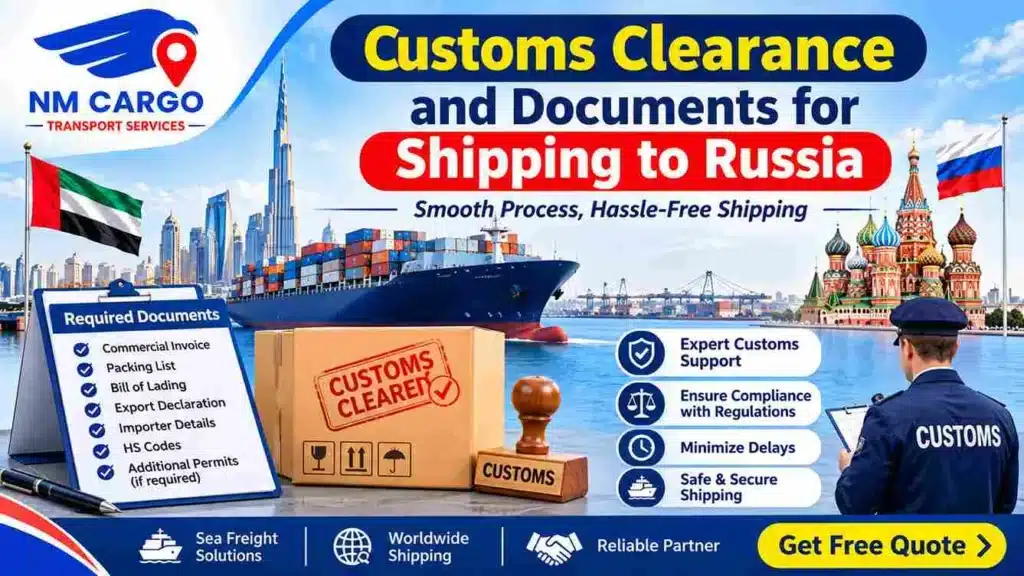
The required documents depend on the shipment type, product classification, declared value, origin, and importer details. Commonly requested documents may include:
Commercial invoice
Detailed packing list
Bill of lading
Export declaration, where applicable
Importer and consignee information
Product descriptions and HS codes
Relevant permits or certificates, when required
For certain products, additional conformity documents or regulatory approvals may be necessary. Goods subject to sanctions, export controls, or import restrictions require careful screening before transportation. The shipper and consignee should confirm that the goods, parties, route, and payment arrangements comply with applicable laws.
Our customs clearance services can help customers understand and coordinate relevant shipping documentation and clearance arrangements.
How to Choose Between LCL and FCL Shipping?
Selecting between LCL and FCL requires evaluating your shipment instead of relying only on container size.
Consider these factors before making a booking:
Shipment volume: Measure the packed cargo in cubic metres and calculate its total weight.
Shipping budget: Compare the complete LCL and FCL quotations, including additional charges.
Delivery schedule: Consider consolidation time, vessel schedules, and destination handling.
Cargo requirements: Check whether your goods need special packaging, handling, or a dedicated container.
Customs documentation: Confirm that all shipment descriptions, values, and documents are accurate.
Final destination: Check the available shipping route and inland delivery arrangements in Russia.
For smaller shipments, LCL may be the practical choice. For substantial cargo volumes, FCL may provide better space allocation and overall value. Comparing both options with a freight provider can help you make an informed decision.
Sea Freight Services from UAE to Russia with NM Cargo
Shipping goods from the UAE to Russia requires suitable transportation arrangements, accurate documentation, and proper cargo preparation. Whether you are sending a few pallets or a complete container, selecting the right freight option helps organize the shipment.
Our sea cargo services in Dubai provide an option to explore international sea freight arrangements for different cargo requirements. Customers can also consider door-to-door cargo services for collection and delivery coordination, subject to route and service availability.
For commercial shipments, personal belongings, or larger consignments, share your cargo details, including dimensions, weight, quantity, pickup location, and Russian destination. This information helps assess suitable transportation options and prepare a more accurate quotation.
Contact NM Cargo to discuss your LCL vs FCL shipping requirements from UAE to Russia and explore a suitable freight solution.
Frequently Asked Questions (FAQs)
What is the main difference between LCL and FCL shipping?
LCL allows multiple customers to share space in one shipping container, while FCL provides an entire container dedicated to one shipment. LCL is commonly used for smaller cargo volumes, whereas FCL is suitable for larger consignments.
Is LCL shipping cheaper than FCL from UAE to Russia?
LCL is often more economical for smaller shipments because you pay for the allocated cargo space. FCL may offer better value for larger shipments. The final cost depends on freight rates, handling, port charges, and destination expenses.
When should I choose FCL shipping to Russia?
Consider FCL when you have a large shipment, need a dedicated container, or want to reduce shared cargo handling. Compare the full container quotation with LCL before making your decision.
How is LCL shipping charged?
LCL shipping is generally charged according to the shipment’s chargeable volume or weight under the freight provider’s tariff. Minimum charges and handling fees may also apply.
Does LCL shipping take longer than FCL?
LCL can take additional time because cargo needs consolidation before departure and deconsolidation after arrival. FCL generally avoids these shared-container stages, but actual transit times depend on the route and shipping schedule.
Our Services

+971 42 23 3038
If You Need Any Help Contact With Now